Buying an ice cream van: the complete buyer's guide to trailers, the Ape, ice cream bikes & more
Thinking about buying your own ice cream van – to get started in a mobile ice cream business, or to expand what you already offer? A good decision needs more than a single price tag. This guide shows you honestly which vehicle types exist, what they cost new and second-hand, where to buy from a reputable source – and what to check before you sign anything.
Vehicle types at a glance: what suits your plans?
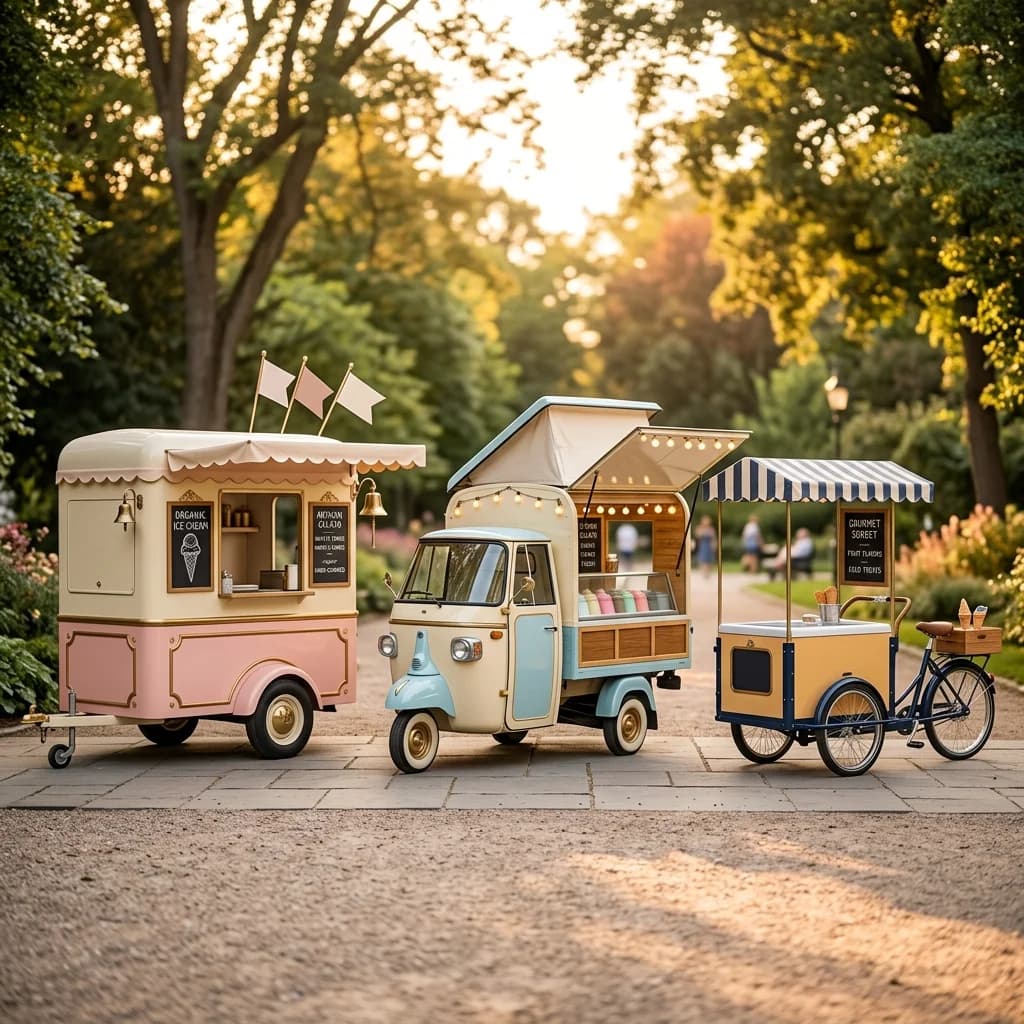
"Ice cream van" is an umbrella term for quite different vehicles – from the compact Ape to the large sales trailer. Your choice depends on your budget, how many guests you want to serve, and how mobile you need to be.
| Vehicle type | New price (approx.) | Second-hand (approx.) | Ideal for |
|---|---|---|---|
| 🚚 Ice cream van trailer | approx. €12,000–42,000 | from approx. €8,000–15,000 | Street festivals, large events, high capacity |
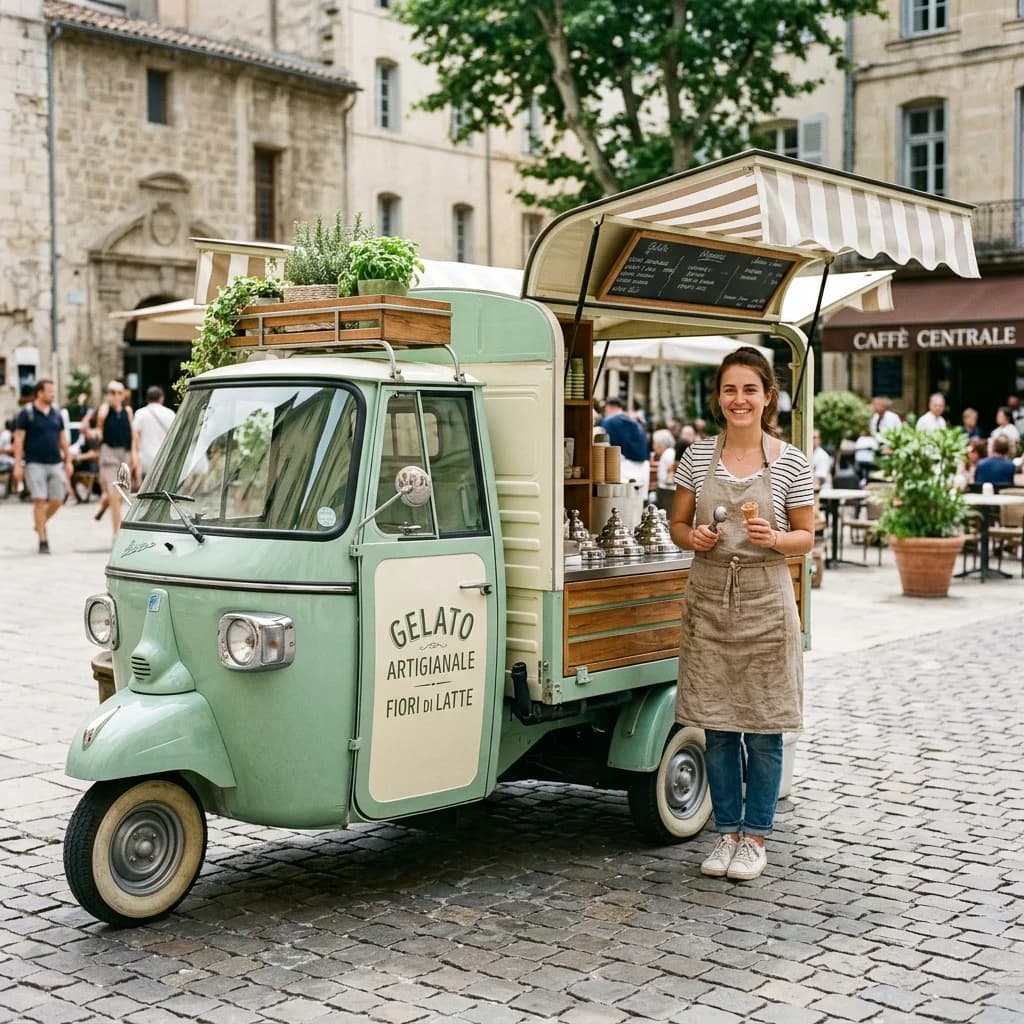
| 🛺 Piaggio Ape / mobile ice cream unit | approx. €10,000–20,000 (depending on conversion) | varies a lot, marketplace listings under €10,000 possible | Weddings, garden parties, a great photo prop |
| 🚲 Ice cream bike / cargo bike | approx. €3,000–7,000 | significantly cheaper, individual listings | small events, zero emissions, pedestrian zones |
| 🏪 Mobile display freezer / ice cream counter | approx. €2,000–6,000 | often cheaper, depending on the cooling technology | Indoor events, trade shows, no vehicle needed |
Indicative prices, not quotes – the actual cost depends heavily on specification, cooling technology and condition.
Buying new: these manufacturers build ice cream vans in Germany and Europe
If a warranty, current hygiene standards and a fixed delivery date matter to you, buying new from a specialist manufacturer is the safest route:
- BuddyStar – German manufacturer of the "Eisbuddy" sales trailer. Entry-level model from €12,290 net (€14,625.10 gross), built in Germany, comparatively short lead times.
- ROKA-Werk – premium manufacturer of mobile catering vehicles, including ice cream vans and retro-styled mobile units based on the Piaggio Ape.
- Lagermax (ape-piaggio-umbau.com) – specialist in converting the Ape Classic into ice cream vans, known for the "Ape Classic Gelatini".
- Cereda – Italian manufacturer of hand-built Ape ice cream sales vehicles ("ape artigianale"), with information available via sites including rauschenbach.de.
- Frisani – specialises in second-hand catering equipment: ice cream machines, soft serve machines, display freezers and, at times, second-hand or ex-demo Ape event vehicles.
- Streetfood-Market – a vendor where you can choose to buy, hire or lease an ice cream van.
A look at the wider market shows huge price ranges for new trailers: from lean entry-level models around €12,000 to fully fitted-out sales trailers well beyond €40,000. Always get several quotes and compare exactly what's included in the specification – the cooling unit, counter, lighting and registration all make a big difference to the price.
Buying second-hand: where to find a reputable listing
A second-hand ice cream van significantly lowers the barrier to entry. The main marketplaces:
- Kleinanzeigen.de – the largest selection of second-hand ice cream van trailers, Ape conversions and ice cream bikes in Germany, mostly from private sellers or small businesses.
- TruckScout24.de – geared more towards larger, commercially used vehicles and trailers.
- gebraucht-kaufen.de – another marketplace for second-hand catering and sales vehicles.
When buying second-hand, a thorough on-site inspection is worth it: does the cooling work reliably, are the electrics in good order, are the TÜV inspection and registration current, and does the condition of the counter/panelling match the look you want? A professional pre-purchase inspection is almost always worth it – especially for older Ape conversions or trailers with an unclear service history.
The DIY route: having it converted yourself
Instead of buying a ready-made ice cream van, some people choose the conversion route: buying a van or basic trailer and having a specialist workshop fit it out with cooling technology, a sales counter and a power supply. The advantage: you decide the layout, fit-out and look entirely yourself. The disadvantage: more planning effort, a longer lead time, and a cost range that depends heavily on the scope of the conversion – depending on how extensive the fit-out is, such conversions usually run in the mid four-figure to low five-figure range on top of the base vehicle. Get concrete quotes from several conversion workshops before committing to this route, and clarify early on which food safety requirements (hygiene, cold chain) your conversion needs to meet.
Checklist: what to think about before you buy
Is the investment worth it – or should you test first?
An ice cream van is no small thing: depending on the vehicle type, you're looking at investing anywhere from around €3,000 (ice cream bike) to over €20,000 (Ape or large trailer). Before you tie up that much money, it's worth asking an honest question: do you already know for certain there's enough demand in your area? Many aspiring ice cream vendors underestimate how much success depends on winning customers – not on the vehicle itself.
One way to lower the risk: register for free as a vendor on eisbuchen.de first and test the market – for example with a borrowed or smaller vehicle, before you invest in a bigger one. That way you see real request numbers from your area before committing to a particular vehicle. Find out more about getting started in our guide to starting an ice cream business.
How do I find my first customers once I have an ice cream van?
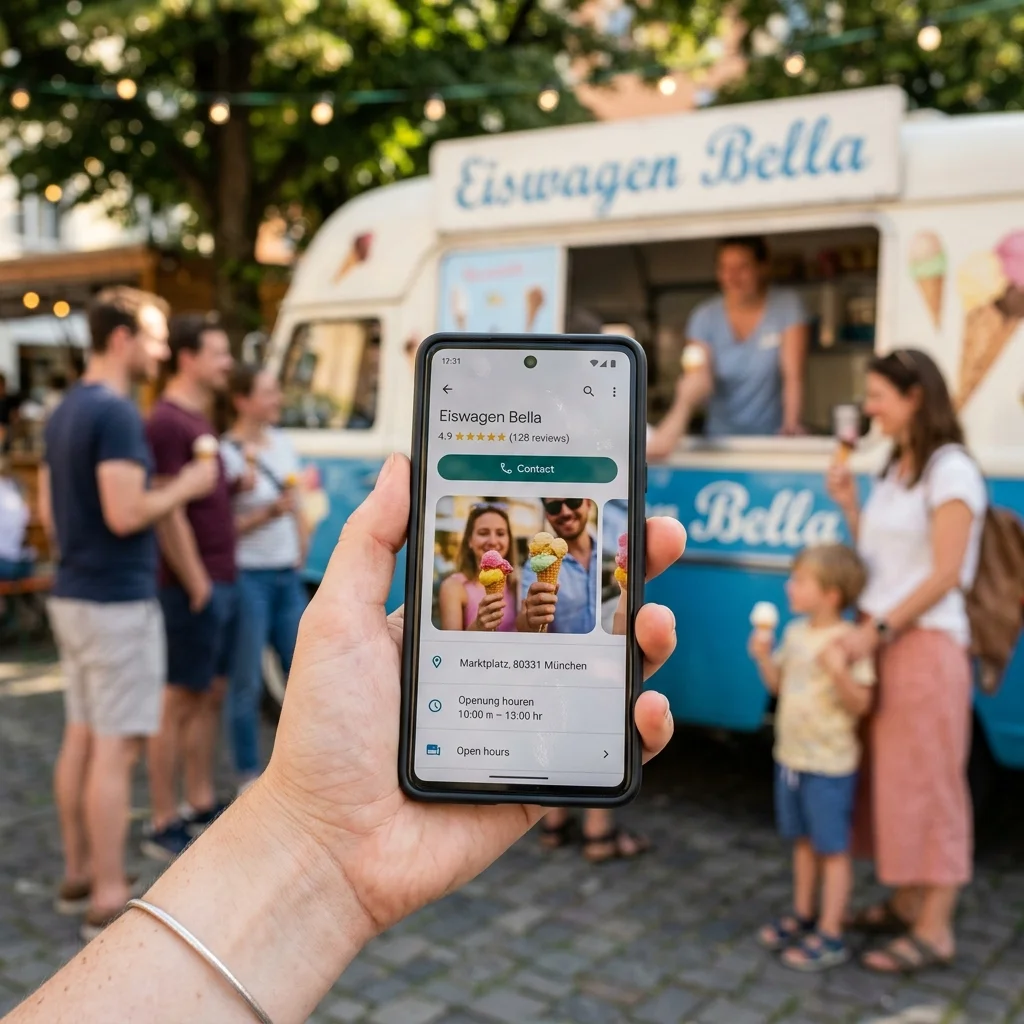
Whether it's a classic trailer, an Ape, an ice cream bike or a display freezer – once the vehicle is sorted, the real work begins: finding customers. The fastest route there, without your own website or advertising budget, is a specialist platform. On eisbuchen.de you set up a profile with photos, flavours and your service area in a few minutes – customers in your area send you requests directly, with no active searching needed on your part. Our overview explains exactly how it works.
Conclusion
There's a route to your own ice cream van for practically every budget – from an ice cream bike for around €3,000 to a fully fitted-out sales trailer for over €30,000. In the end, what matters more than the perfect vehicle is whether you can reliably get customers. Anyone who gets clarity on demand before investing – for example via a free vendor profile on eisbuchen.de – ends up buying more purposefully and with far less risk.